
What Does 30 Pounds of Fat Look Like? See It On Your Own Photo
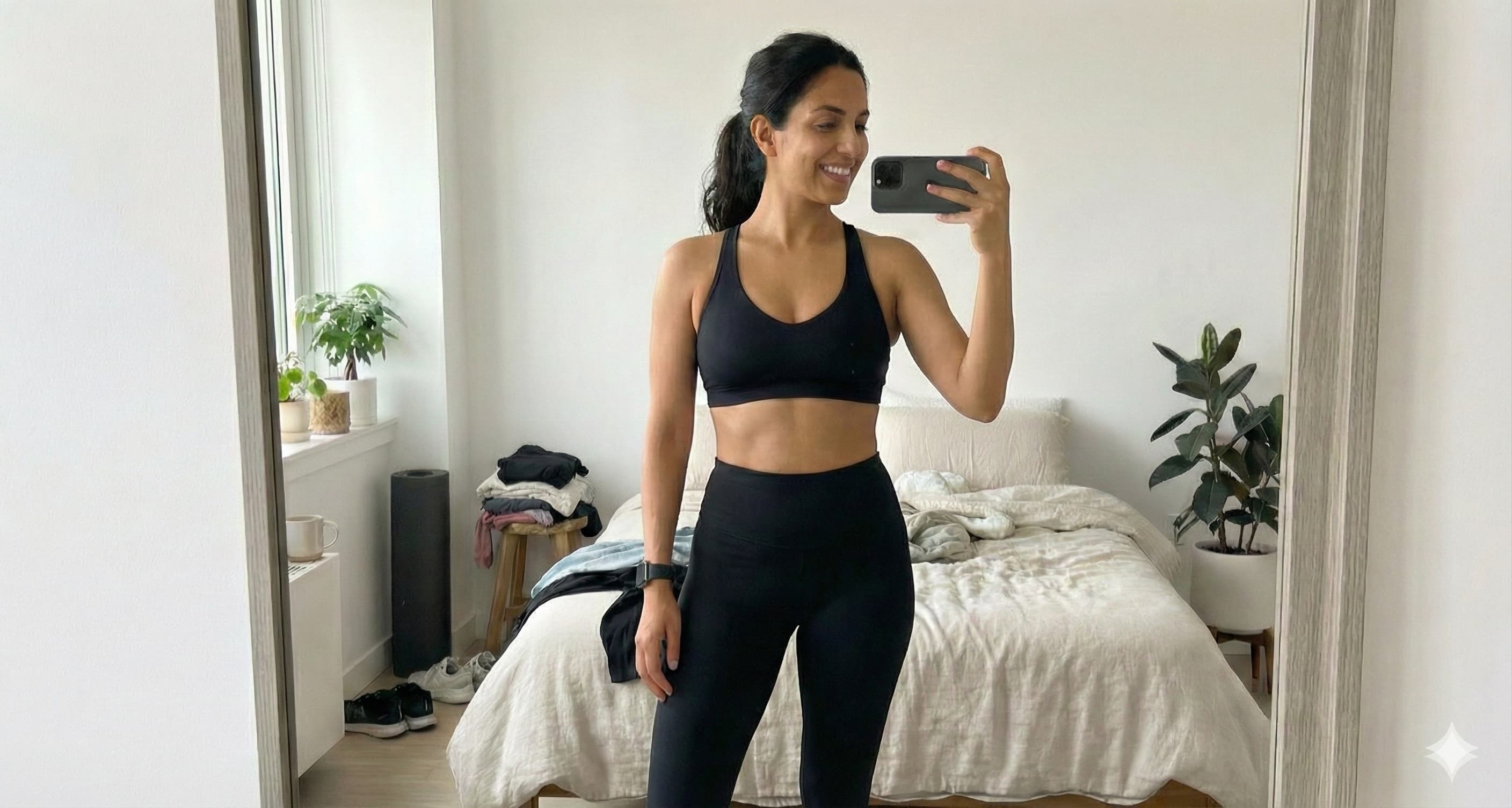
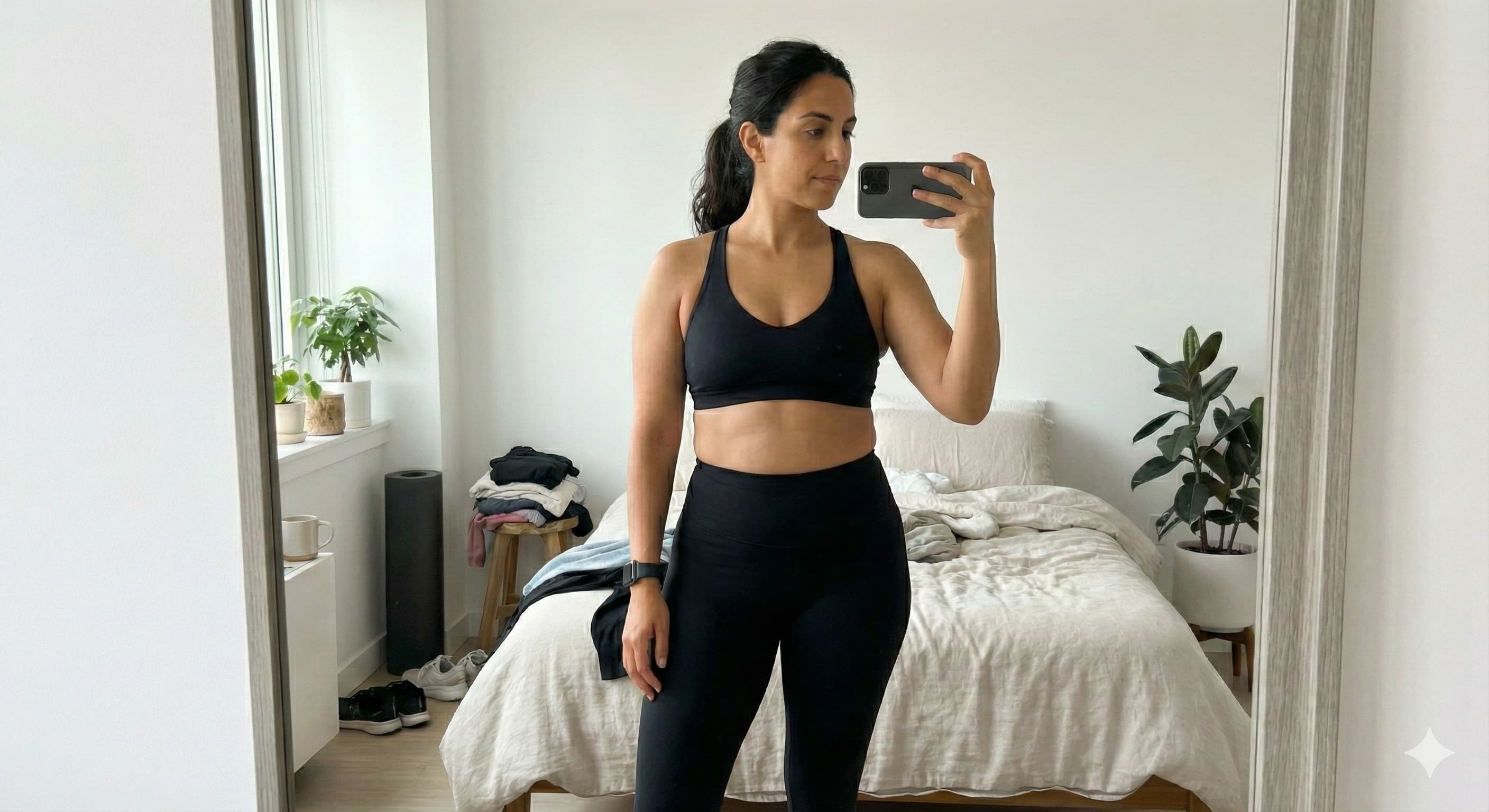
Thirty pounds of fat looks like roughly three and a half gallons of milk — fat is less dense than muscle, so it takes up more space than the number on the scale suggests. On a person, losing 30 pounds shows first in the face (slimmer cheeks, a sharper jawline, less under the chin) and then the waistline, with how dramatic it looks depending on your height and starting weight.
Thirty pounds is easy to say and almost impossible to picture, so below are both answers people are really after: how much space that fat physically takes up, and what losing it looks like on a real body — including a way to see it on your own photo.
How Big Is 30 Pounds of Fat?
Body fat is less dense than muscle, so 30 pounds of it takes up more room than most people expect—roughly the volume of three and a half gallons of milk, or a medium moving box packed full. That's the load being carried around every day, on the frame, the joints, and the face.
Seen as volume rather than a number on a scale, it becomes obvious why removing it changes a silhouette so visibly. But "how big is the blob of fat" is only half the question. The more useful half is: what does losing 30 pounds look like on a person?
What Losing 30 Pounds Actually Looks Like
The slider above shows a 30-pound difference. Drag it back and forth and notice where the change concentrates—the face and the waistline do most of the visible work. In general, a 30-pound loss tends to show up in a fairly predictable order:
- The face first. Cheeks slim, the jawline sharpens, a double chin reduces. This is why people often look strikingly different after 30 pounds even before their clothes change much.
- Then the midsection. The waist narrows and clothes start fitting loosely through the stomach.
- Then overall proportions. Shoulders, neck, and limbs look leaner, changing the whole silhouette.
How dramatic it looks depends heavily on starting point and height: 30 pounds on a 5'4" frame is a much bigger visual change than on a 6'2" frame. Which is exactly why a generic example can only tell you so much.
The Problem with Imagination Alone
Here's why you can't mentally picture your weight loss transformation: your brain has no reference point. You've never seen yourself 30 pounds lighter (or if you have, it was years ago and your face has changed). Mental visualization requires data your brain simply doesn't have.
This is where most people get stuck. You want to lose weight, you know you should, but the goal feels abstract. "Lose 30 pounds" is just a number. What does that actually mean for how you'll look? Will your jawline become more defined? Will your cheeks slim down? What about your body proportions?
Without a clear visual of the destination, it's hard to stay motivated for the months-long journey. You're essentially running a race where you can't see the finish line—and that makes it really easy to quit halfway through.
How AI Body Visualization Works
AI weight loss visualizers solve this exact problem. Instead of leaving you to imagine what 30 pounds lighter looks like, the AI generates a realistic preview using your actual photo.
Here's how the technology works: you upload a current photo, and the AI analyzes your facial structure, body proportions, and how fat distribution typically changes during weight loss. It then generates a new image showing what you'd likely look like after losing the specified amount of weight—in this case, 30 pounds.
This isn't a simple "shrink" effect like a photo editor. The AI understands human anatomy. It knows that facial fat reduces in specific patterns—cheeks slim first, then under the chin, then around the jawline. It preserves your unique features while simulating realistic fat loss.
The result? A photo-realistic preview of your future self that your brain can actually process. Now "lose 30 pounds" isn't just a number—it's a face you recognize, a body you can see yourself achieving.
What Does 30 Pounds Look Like on Your Face?
Your face usually shows weight loss first. Losing 30 pounds typically slims the cheeks, sharpens the jawline, reduces a double chin, and makes your cheekbones more visible. Because the face has so little muscle, even the first 10–15 pounds can noticeably change how you look in photos. If you want to focus on this specifically, see our deep dive on how your face changes when you lose weight, or preview it directly with the face visualizer.
What Does 30 Pounds Look Like on Your Body?
On the body, 30 pounds reshapes your silhouette—a flatter stomach, a more defined waist, and slimmer arms and legs. Clothing sizes typically drop an increment or two, which is often the change people register before the mirror convinces them. You can also compare the neighbouring milestones: 20 pounds and 50 pounds.
How Long Does It Take to Lose 30 Pounds?
At a healthy, sustainable pace of 1–2 pounds per week, losing 30 pounds takes roughly 4 to 7 months. Losing it gradually—and keeping protein high with some strength training—also helps you avoid the gaunt, "deflated" look that can come from very rapid loss. The visualizer shows the healthy transformation path, not an unrealistic crash-diet result.
See Your Transformation Now
Ready to answer the question "what would I look like if I lost 30 pounds?" See it on your own photo with our dedicated 30 lbs weight loss visualizer, or explore any goal with the "what would I look like if I lost weight" tool. No guessing, no vague mental images—just a clear example visualization in seconds.
Whether you're just starting your journey or looking for motivation to push through a plateau, seeing your future self makes all the difference. The finish line becomes real, and suddenly, 30 pounds doesn't feel like an impossible goal—it feels like a version of you that's already waiting.
Frequently Asked Questions
What does 30 pounds of fat look like?
As a volume, roughly three and a half gallons of milk — fat is less dense than muscle, so it takes up more space than the number suggests. On a person, losing 30 pounds usually shows first in the face (slimmer cheeks, sharper jawline) and then the waist, with the overall effect depending a lot on height and starting weight.
What would I look like if I lost 30 pounds?
Upload one clear photo and our AI generates a realistic preview of you 30 pounds lighter—your own face and body, not a generic model. Most people notice the biggest change in the face: slimmer cheeks, a sharper jawline, and a reduced double chin.
Is seeing myself 30 pounds lighter accurate?
It looks photorealistic because it re-generates your actual photo with modern image AI rather than applying a simple slimming filter. Still, it’s an example of a possible outcome, not a prediction. Individual results vary with genetics, age, skin elasticity, and how you lose the weight.
How long does losing 30 pounds take?
At a healthy 1–2 pounds per week, about 4 to 7 months. A gradual pace with adequate protein helps preserve muscle and keeps your face looking healthy rather than gaunt.
Ready to see your own transformation?
Upload your photo and let our AI show you what's possible. It takes less than a minute.
Visualize My Weight Loss Now